Experiential learning is a hands-on approach to education where students learn by doing, reflecting on the experience, and connecting it to real-world understanding. This way, students move beyond just listening to actively engaging with material to build deeper skills and knowledge, often through cycles of doing, reflecting, thinking, and applying. Key examples include internships, field trips, research, and service-learning, fostering skills like problem-solving and adaptability by bridging theory and practice [1, 2].
Project-Based Learning (PBL) is a form of experiential learning where learners gain deep knowledge and skills by working for an extended period to investigate and respond to a complex, authentic, real-world question, problem, or challenge, developing critical thinking, collaboration, and self-directed learning through inquiry and creating tangible products. In PBL, the project is the learning process, driven by sustained inquiry and culminating in a public presentation or exhibition. As such, PBL is regarded as a student-centred teaching method, built on the ideas of John Dewey [3].
Both experiential and project-based learning are implied in one of the five major shifts in 100 Years of Engineering Education, i.e., a renewed emphasis on design, as stated in [4].
[1] Dewey, J. The School and Society, 2nd ed. Chicago, IL: Univ. Chicago Press, 1915.
[2] Kolb, David A. Experiential Learning: Experience as the Source of Learning and Development. Prentice-Hall, 1984.
[3] Kilpatrick, W. H. The Project Method. Teachers College Record 19, no. 4 (September 1918): 319–335. Sage Journals
[4] Froyd, J. E., Wankat, P. C., & Smith, K. A. (2012). Five major shifts in 100 years of engineering education. Proceedings of the IEEE, 100 (Special Centennial Issue), 1344-1360.
Topics
- Experimental skills
- Design skills
- Impact of IA on experiential and project-based learning
- Instructional laboratories in Engineering Education
- Hands-on, virtual and remote laboratories
- Cornerstone and capstone projects
- Learning by doing
- Internships and field trips
Track Scientific Committee
Alexander Kist, University of Southern QueensLand, Australia
Carlos Arguedas Matarrita, Universidad Estatal a Distancia, Costa Rica
Claudius Terkowsky, TU Dortmund, Germany
Dominik May, University of Wuppertal, Germany
Doru Ursutiu, University “Transylvania” of Brasov, Romania
Euan Lindsay, Aalborg University, Denmark
Felix García-Loro, National University of Distance Education, Spain
Javier García-Zubía, University of Deusto, Spain
José Martins Ferreira, University of Porto, Portugal
Marcello Ferreira, Universidade de Brasília, Brasil
Raina Hussein, University of Washington, WA, USA
Raul Cordeiro Correia, Instituto Politécnico de Setúbal, Portugal
Simone M. Biléssimo, Universidade Federal de Santa Catarina, Brazil
Sónia Pizarro, Polytechnic of Porto – School of Engineering, Portugal
Tobias Ortelt, TU Dortmund, Germany
CHAIRS:
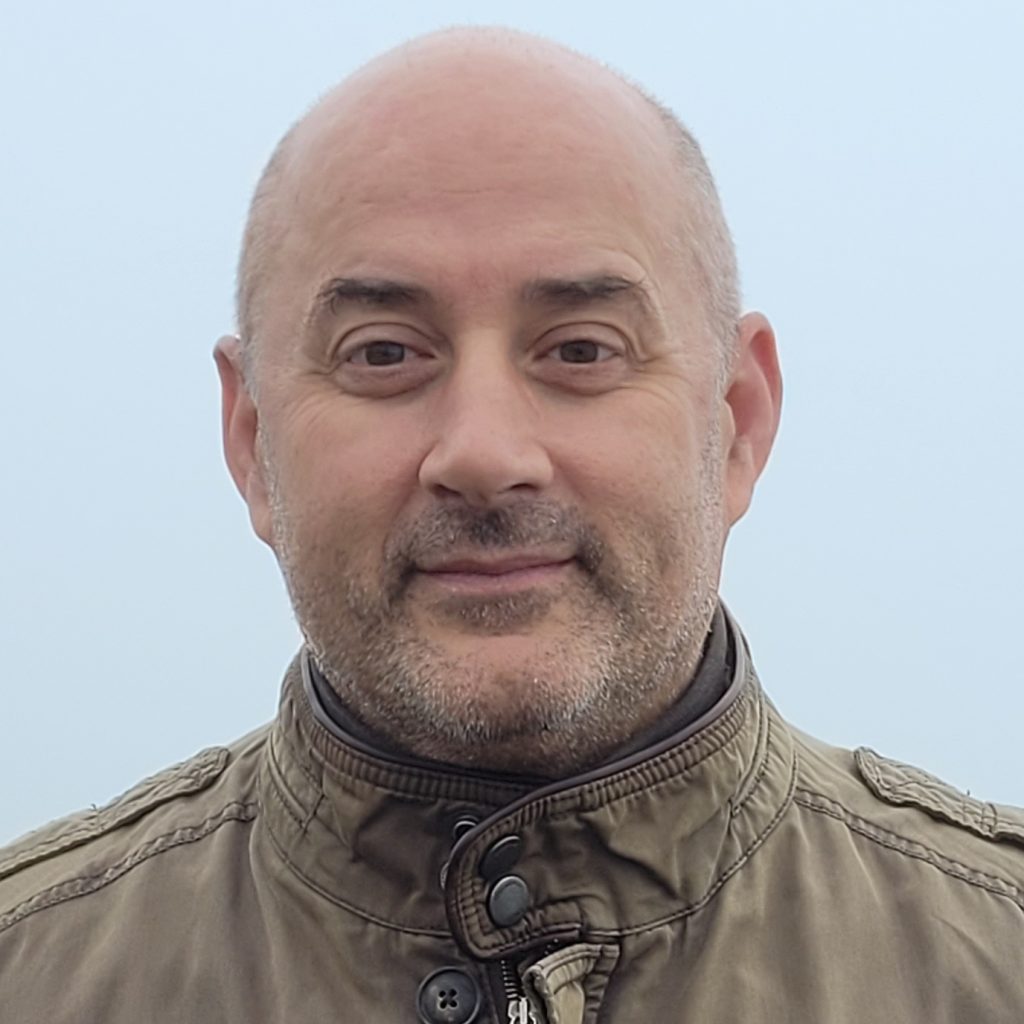
Gustavo Ribeiro Alves
Instituto Superior de Engenharia do Porto, Portugal
Juarez Bento da Silva
Universidade Federal de Santa Catarina, Brazil
Maria Arcelina Marques
Instituto Superior de Engenharia do Porto, Portugal