Keynote 1
“Challenging unconscious bias in education to create diverse and inclusive spaces“
Alicia Garcia-Holgado, University of Salamanca, Spain

Alicia García-Holgado is an Associate Professor in the Computer Science Department, University of Salamanca, Spain.
She received a degree in Computer Sciences in 2011, a Master in Science in Intelligent Systems in 2013, and obtained a PhD in 2018 from the University of Salamanca in the Doctoral Programme ‘Education in the Knowledge Society’, focused on the use of technological ecosystems as a tool to improve knowledge management in different contexts.
She is member of the research GRoup of InterAction and e-Learning (GRIAL) at the University of Salamanca since 2009, where she leads the research line ‘Social Responsibility and Inclusion’. Her research focuses on the development of technological ecosystems for knowledge and learning processes management in heterogeneous contexts, and the promotion of diversity and inclusion in Science, Technology, Engineering, and Mathematics (STEM), with a particular focus on engineering and technology.
She also is board member of the Women in Computing Committee of the Scientific Society of Spanish Informatics (SCIE) and 4 years in the coordination team of CLEI Community for Latin American Women in Computing.
The social context has a significant impact on the way we socialize and on how each person develops their identity. Family, school, culture, media, and other social influences shape our beliefs, values, attitudes, and expectations from an early age. As a result, biases and stereotypes related to gender, ethnicity, socioeconomic background, religion, disability, and other personal characteristics become part of our everyday interactions and experiences. These biases are also present in educational environments, from kindergarten to university, where they can influence participation, academic opportunities, expectations, and the sense of belonging of students. This keynote introduces the different types of biases and stereotypes that can affect educational settings, with a particular focus on unconscious biases. It explores how these hidden assumptions are formed, how they influence decision-making and behaviours, and why it is important to identify and challenge them.
The keynote also encourages reflection on inclusive educational practices and provides insights into how educators can contribute to creating more diverse, equitable, and welcoming learning environments for all students.
Keynote 2
“Are We There Yet? From ICT to AI and Hybrid Cognition: Reflections on the Enduring Challenge of the Digital in Education“
João Correia de Freitas, Nova FCT, Portugal
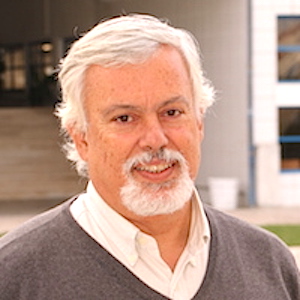
João Correia de Freitas holds a PhD in Educational Sciences from Universidade Nova de Lisboa and a degree in Biology from the Universidade de Lisboa. He is a Retired Assistant Professor at the NOVA school of science and technology (NOVA FCT), where he taught from 1988 until his retirement in 2025. During his academic career, he coordinated the Master’s Programes in Teaching Biology and Geology and in Education, served on the coordination team of the Doctoral Programe in Education, and supervised numerous Master’s dissertations and doctoral theses. He also led the e-Learning Laboratory at Nova FCT supporting innovative educational use of Information and Communication Technologies (ICT) in higher education.
Alongside his academic career, he held several national leadership positions in Portuguese government initiatives for the integration of digital technologies in education. He served as Regional Coordinator of the MINERVA Project (1988–1994), the Ministry of Education’s pioneering programe for the introduction of information technology into teaching and learning; National Coordinator of the Internet na Escola (Internet in Schools) Programe (1997–2002), led by the Ministry of Science and Technology, which connected every Portuguese school to the Internet and promoted its educational use; and taskforce Manager of the Ministry of Education’s CRIE Mission Team (Computers, Networks and the Internet in Schools) (2005–2008), responsible for the nationwide deployment of digital technologies, curriculum development, and teacher professional development.
He is currently a researcher at the UIED – Research Unit for Education and Development (NOVA FCT) and at EduNova (NOVA FCSH, NOVA FCT and ISPA consortium), and serves as President of EDUCOM, a Portuguese teachers’ association for ICT Educational use.
His research and professional interests focus on Digital Technologies in Education, e-learning, pedagogical innovation, teacher education, digital transformation in education, and educational policy. He has published in these fields and is a frequent keynote speaker at national and international academic conferences.
The pursuit of better education through digital technologies has been a persistent endeavor for more than four decades, particularly since the 1980s. In Portugal, as elsewhere, successive initiatives and programes have been launched at local, regional and national levels, while generations of teachers, researchers, software developers and content producers have explored the possibilities — and confronted the complexities — of pedagogical innovation supported by digital learning environments.
The COVID-19 pandemic suddenly brought the digital in education to the forefront on an unprecedented scale, but with an inherent bias: under lockdown, digital technologies were primarily called upon to provide an emergency substitute for face-to-face education, rather than to support its improvement or pedagogical transformation. It is therefore perhaps unsurprising that this experience did not result in the profound and lasting renewal of learning environments that many had hoped for. In many contexts, it also generated fatigue and even a form of ‘antibodies’ against the continued use of digital technologies in education. And now generative AI has entered the educational arena, bringing remarkable, yet still incompletely understood, possibilities alongside equally significant uncertainties, risks and challenges.
Against this background, this keynote looks back at more than forty years of teaching, research, development, experimentation and policy initiatives around the digital in education. What have we learnt about the relationship between technological innovation and educational change? And, crucially, can those lessons inform the choices we are now making about AI and the future of digital technologies in education?Looking ahead towards increasingly hybrid forms of cognition, in which human and artificial agency may become progressively intertwined, the question is no longer simply what digital technologies can do for education, but what kind of education we want them to help us build. As technologies continue to evolve, so too do our educational aspirations and the very meaning of learning, teaching and knowing. After more than forty years on this journey, we may therefore need to ask: are we there yet — and do we know where ‘there’ is?
Keynote 3
“From e-learning to e-teaching: an AI-driven journey“
José Manuel Martins Ferreira, Universitetet i Sørøst-Norge, Norway
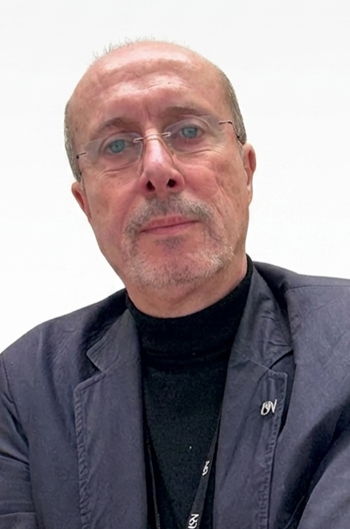
José Manuel Martins Ferreira is a Full Professor of Digital Electronics at the University of South-Eastern Norway, campus Kongsberg.
From July 2014 to June 2018, he served as Vice-Rector of the University of Porto, Portugal, where he was responsible for information management, educational technologies, quality and continuous improvement. During this mandate, he coordinated the certification of U.Porto’s internal quality assurance system, implemented Google for Education and Microsoft Office 365 programmes in all 14 faculties, launched U.Porto’s distance learning platform, and promoted the development of U.Porto’s first MOOC.
From 2010 to 2013, he was Vice-Dean for Education at the Faculty of Engineering of the University of Porto (FEUP). He founded FEUP’s Teaching and Learning Lab in 2008, introduced the Google Apps for Education programme in FEUP in 2013, and was from 2005 to 2011 Head of the University’s panel that awarded the “U.PORTO e-Learning Excellence Prize”.
His PhD, MSc and BSc degrees (in computers and electrical engineering) were obtained at the University of Porto, respectively in 1992, 1987 and 1982. Outside his professional field, he cultivates a love of books in multiple forms: reading, collecting, and writing.
Many technological novelties launched over the course of the last century contributed to an evolutionary process toward a student-centered vision of education. Pedagogical theories advocating this vision existed for a long time, but the pedagogical practices were bound by technological affordances that varied widely over time and across disciplines. On the other hand, several technology-led transformations were accompanied by inflated expectations in relation to their anticipated impact. Despite the availability of pedagogical frameworks and supporting technologies, teacher-centered practices continued to be too common in several scientific and technological domains, particularly in STEM higher education degrees. This status quo has persisted to this day, albeit increasingly challenged by the rise of e-learning solutions during the last quarter of the past century, and the introduction of massive open online courses (MOOCs) in the beginning of the current century. MOOCs promised to empower student autonomy, but the pedagogical effectiveness of free courses was hampered by several reasons, e.g., extremely high-attrition rates, lack of formal recognition, language and cultural factors, and particularly the pedagogical limitations imposed by peer-support. Although further challenging the role of teachers in a world where the source of knowledge was already shifting away from the pulpit, these limitations ensured that MOOCs alone wouldn’t make teachers redundant. While it may sound provocative to raise this question, it is true that the educational disruption caused by AI pushes this challenge to another level, and indeed teaching as we knew it until just a couple of years ago has already become redundant. Student empowerment leveraged by AI is yet hindered by several factors, namely unequal accessibility and epistemic skills, but it will nevertheless trigger an irrevocable departure from teacher-centered pedagogical practices that survived almost untouched through the e-learning age. Such as the student side of the equation transitioned from paper-based methods into e-learning, so will the teachers’ side transition into what we may loosely call “e-teaching”. The complementary leg of this journey, from e-learning to e-teaching, is already under way and calls for the discussion of new teacher roles, new learning content and new assessment methods, all of which were not possible before AI was available.
This talk will address the technology-led transformations that impacted teaching and learning in the recent past, focusing on two main aspects: how AI redefines a typical teacher’s day in our time, and how we can envisage the future of university education in an AI-dominated world.